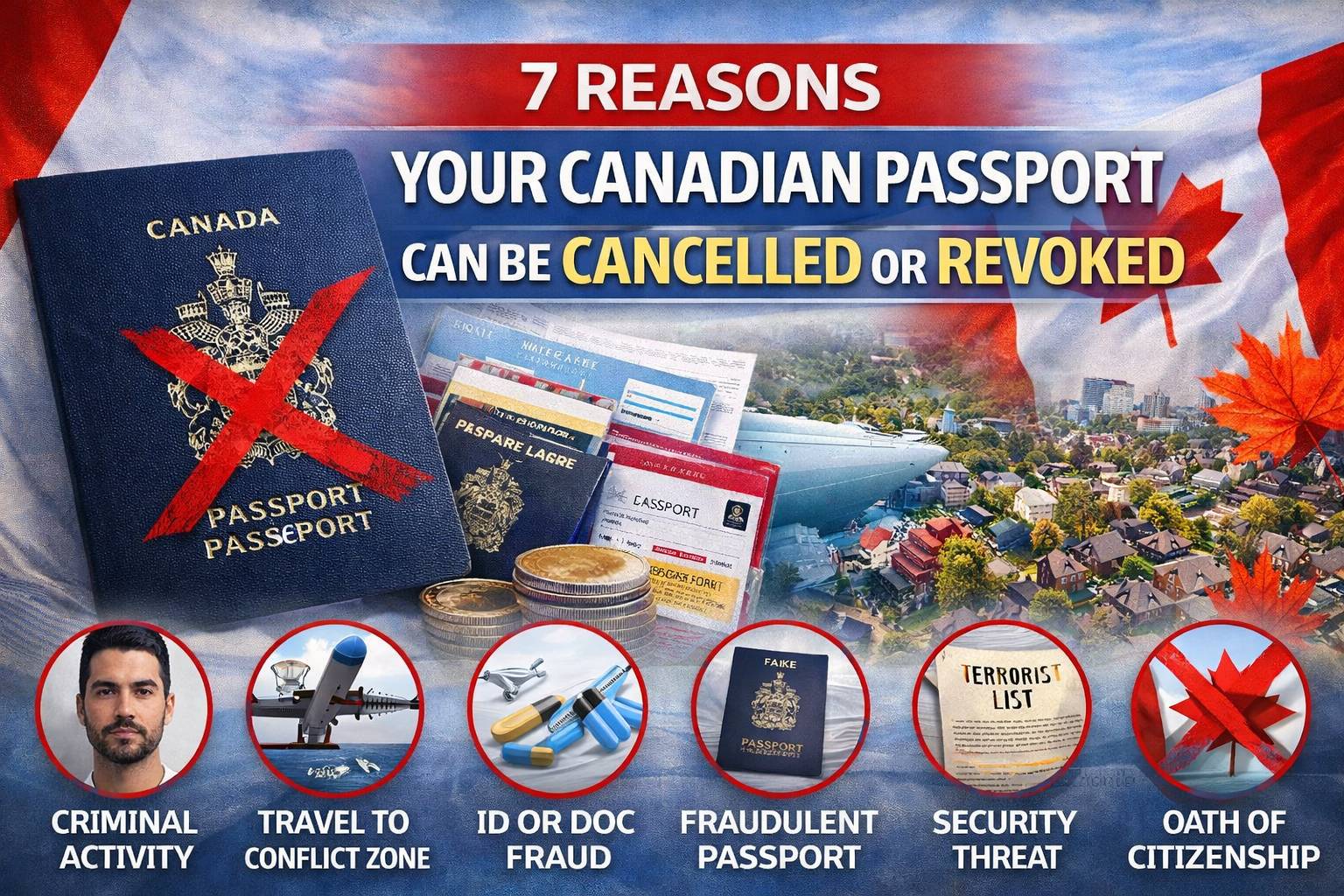
Your Canadian passport may look like personal property, but legally it belongs to the Government of Canada. Under federal rules administered by Immigration, Refugees and Citizenship Canada (IRCC), the Minister has broad authority to revoke, cancel, suspend or refuse passport services in a range of situations.
Most Canadians assume passports are only at risk after serious criminal convictions. In reality, financial obligations, administrative issues and even reporting your passport lost can render it invalid.
Here’s what Canadians need to understand before booking international travel.

Revocation vs. Cancellation: What’s the Difference?
There are two main ways a passport can be invalidated:
Revocation
- You are notified.
- An administrative review takes place.
- You have an opportunity to respond before a final decision.
Cancellation

- Can happen immediately in certain situations.
- No advance notice may be provided.
- The passport becomes invalid at once.
In both cases, law enforcement and border agencies may be notified, and attempting to use the document can lead to serious consequences.
7 Situations That Could Cost You Your Canadian Passport
You’re Behind on Child Support or Alimony
Under the Family Orders and Agreements Enforcement Assistance Act, persistent arrears in child or spousal support can result in passport suspension or refusal.
If suspended, you must return the passport. Failure to do so can lead to cancellation.

You Let Someone Else Use Your Passport
Permitting another person to use your passport — even a family member — is grounds for revocation.
You could face:
- Immediate revocation
- Criminal charges
- Up to 10 years without passport services
Your passport is tied exclusively to your identity.

You Owe the Government for Emergency Assistance Abroad
If Canadian consular officials helped repatriate you and you haven’t repaid those costs, passport services can be refused until the debt is cleared.
IRCC tracks outstanding financial obligations tied to consular assistance.
You Reported Your Passport Lost or Stolen
Once reported lost, stolen or destroyed, the passport may be cancelled permanently for security reasons.

Even if you later find it, it cannot be reactivated.
You Obtained It Using False Information
Providing false or misleading information during your application can result in revocation — even years later.
Identity verification is taken seriously under federal passport regulations.

You Ignore a Request to Return It
Because passports are government property, failure to return one when requested can lead to:
- Cancellation
- Notification to border authorities
- Possible investigation under the Criminal Code
Attempting to travel with a cancelled passport can result in denial of boarding or entry.
You Lost Canadian Citizenship
If citizenship is revoked — including cases involving fraud in the citizenship process — your passport is automatically invalid.

You must return it immediately.
Serious Criminal Charges (Even Without Conviction)
A conviction is not required.
If charged with certain serious offences, including:

- Travel document fraud
- Smuggling
- Trafficking
- Violent crimes
your passport may be revoked or refused while awaiting trial.
What Happens After Revocation or Cancellation?
Consequences may include:
- Immediate invalidation for travel
- Notification to border and law enforcement agencies
- Inability to obtain a new passport for up to 10 years
If you receive a revocation decision, you may seek judicial review through the Federal Court of Canada within 30 days.
Also Read:
 Canada Launches Updated Seniors Support Program With $1250 Payment: Who Qualifies and How to Apply
Cancellation decisions may not include the same appeal rights.
Is There Any Exception?
In rare and urgent circumstances, the Minister may issue a limited-validity travel document with geographic restrictions.
This is reserved for compassionate, urgent or exceptional situations and is not guaranteed.

Why This Matters for Travellers
Canadians planning international travel should ensure:
- No outstanding legal or financial obligations
- Passport remains in good standing
- No administrative flags exist
Even non-criminal issues — like unpaid child support or unpaid consular debts — can block international travel.
Frequently Asked Questions (FAQ)
Can my passport be revoked without a conviction?
Yes. Certain serious charges can trigger revocation even before trial.

What’s the difference between revocation and cancellation?
Revocation includes notice and review. Cancellation can occur immediately without warning.
Can unpaid child support affect my passport?
Yes. Persistent arrears can result in suspension or refusal.
What happens if I find a passport I reported lost?
It cannot be reactivated once cancelled.

Can I appeal a revocation?
Yes, through the Federal Court of Canada within 30 days.
Is a cancelled passport still valid?
No. It is immediately invalid for travel.
Can I ever travel again after revocation?
Possibly, but restrictions may apply for up to 10 years depending on circumstances.